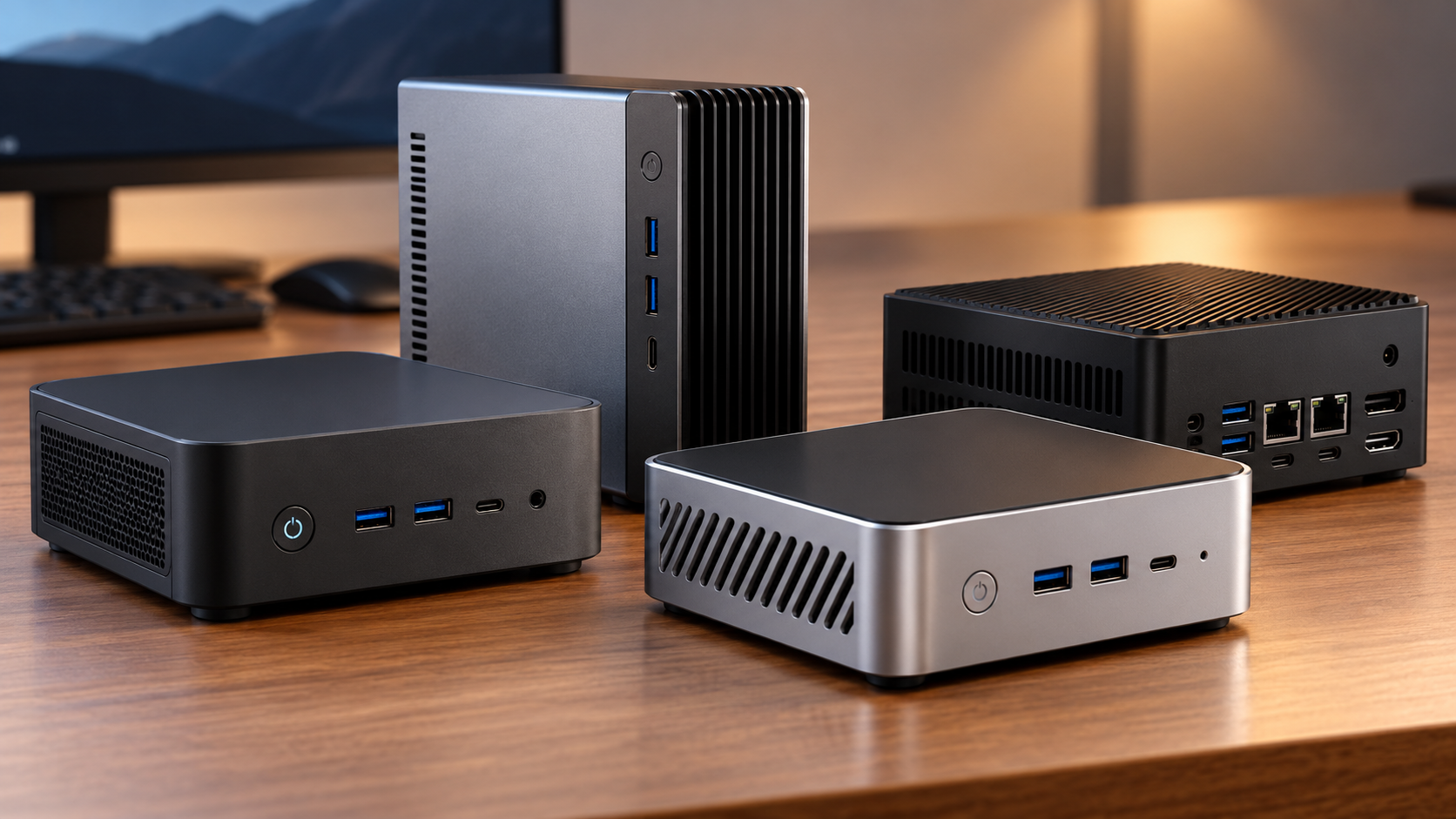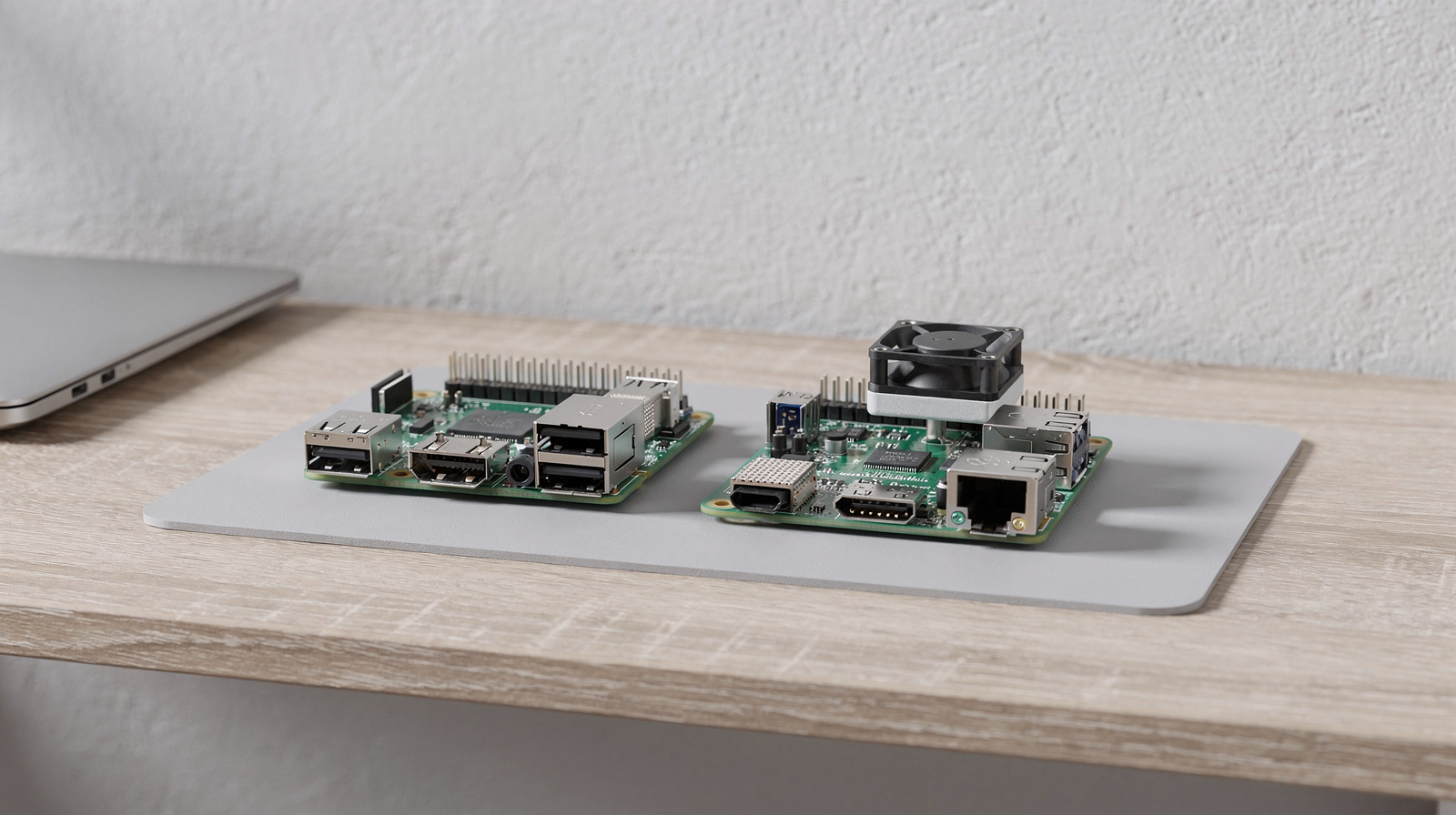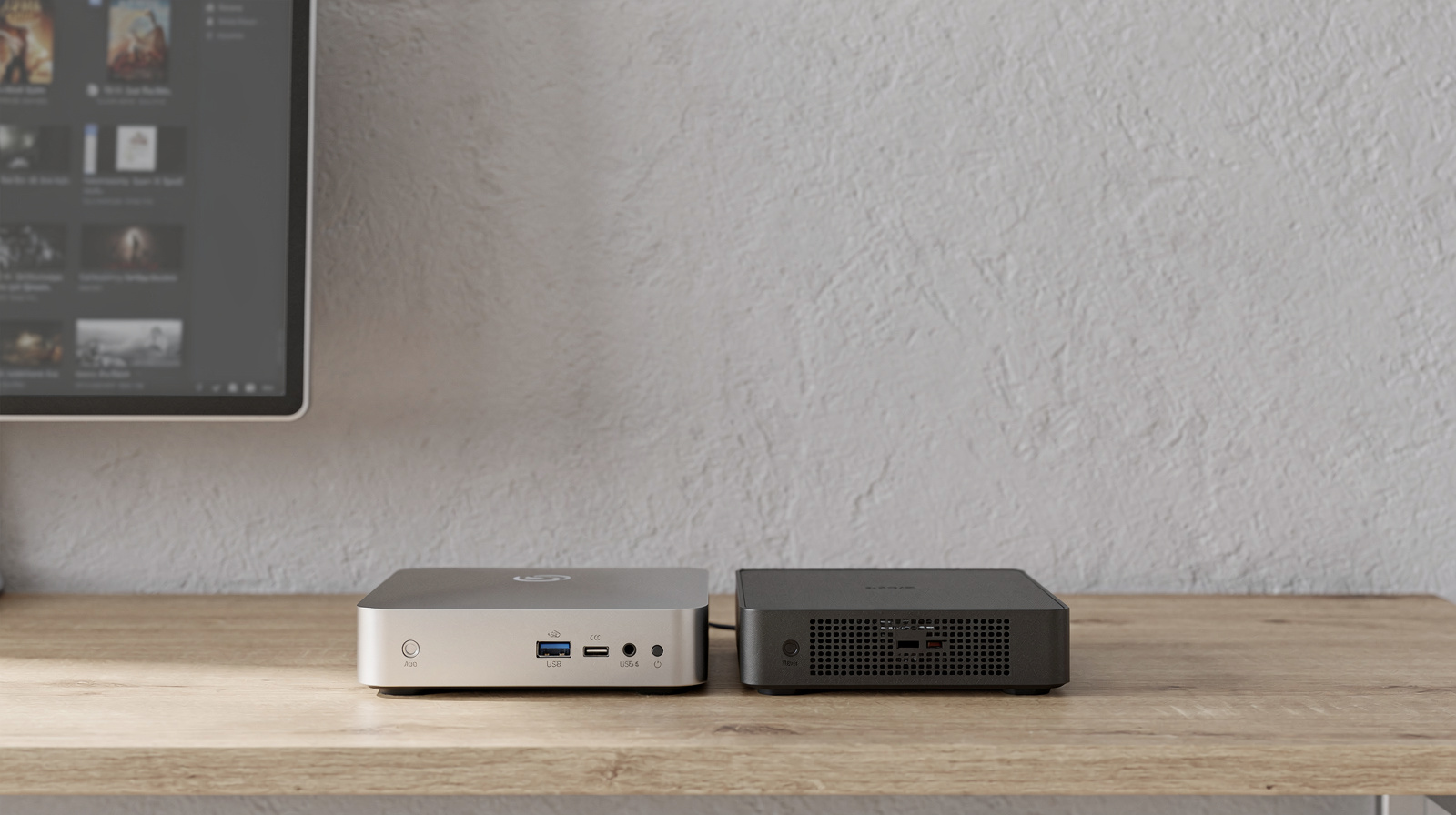
The best Raspberry Pi alternative for most people is the Hardkernel ODROID-C4. It is the same size as a Pi 4, has a 40-pin GPIO header for electronics projects, and has better mainstream software support than most Arm boards: Armbian builds images for it on a current Linux kernel. If you need more speed, the eight-core ODROID-M2 is the step up. If you want ordinary PC software, the x86 ODROID-H5 runs it. For Pi-hole and backups, the ODROID-HC4 is plenty.
Our picks at a glance
- View at Hardkernel
Best direct Pi replacement with GPIO
- View at Hardkernel
Best for more power
- View at Hardkernel
Best x86 board
- View at Hardkernel
Best for Pi-hole and light servers
The picks in detail
- Top pick
Best direct Pi replacement with GPIO
Hardkernel ODROID-C4, 4GB (ODROID-C4)
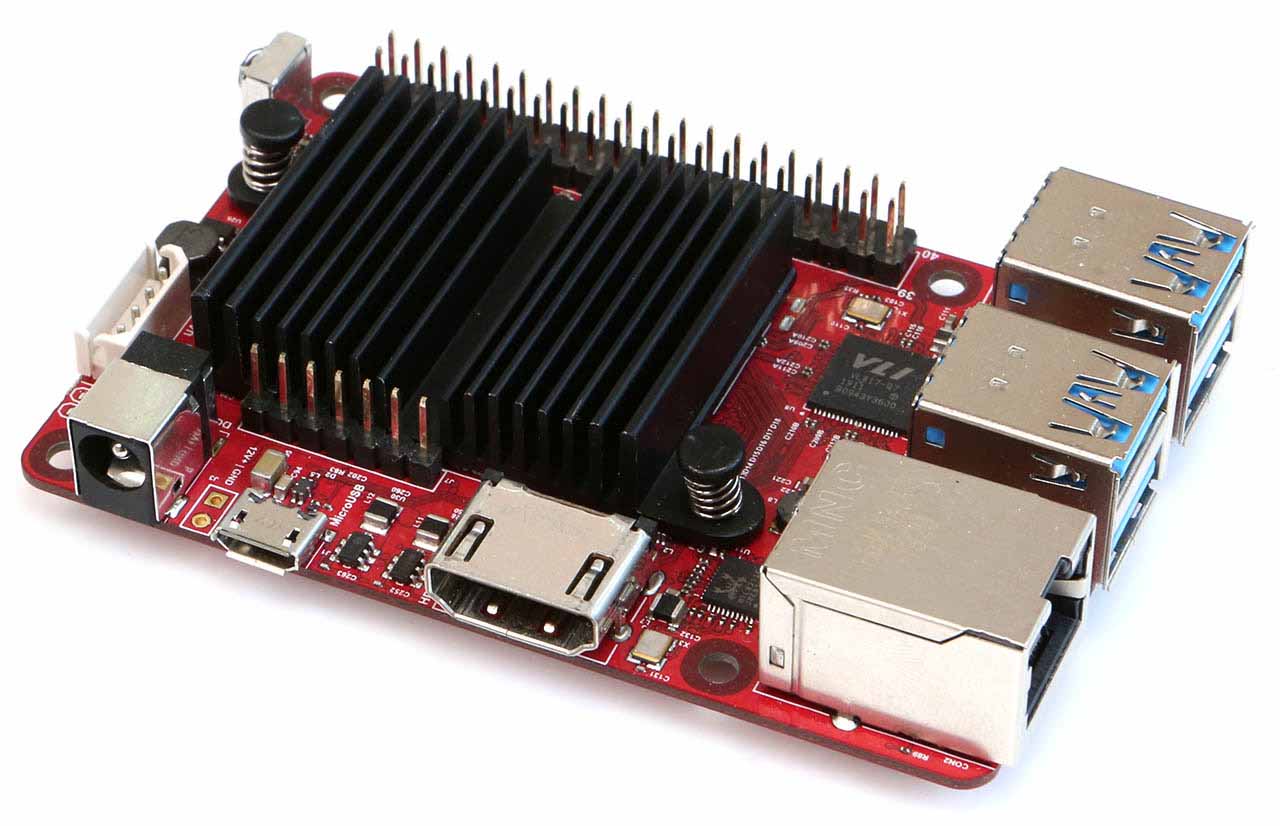
The ODROID-C4 is the closest thing here to a Raspberry Pi 4 from another maker.
View at HardkernelThe board is the same 85 x 56mm size, it has a 40-pin GPIO header with SPI, UART, two I2C buses, PWM and two analog inputs, and it pairs a quad-core Amlogic S905X3 with 4GB of DDR4, Gigabit Ethernet, four USB 3.0 ports and HDMI 2.0. It boots from microSD or an eMMC module. Its software is the strongest of the Arm picks: Armbian lists it at its Standard support level with a current mainline kernel, and Hardkernel ships Ubuntu, Android and CoreELEC images. Buy it for electronics projects or a small always-on job. Skip it if you need Wi-Fi on the board.
What we like
- Pi 4-sized board with a 40-pin GPIO header and two analog inputs
- Four USB 3.0 ports and Gigabit Ethernet
- Armbian images on a current mainline kernel
Watch out for
- No Wi-Fi or Bluetooth on the board
- Powered from a 12V barrel jack, not USB-C; the adapter is sold separately
- The analog inputs take 1.8V at most, not 3.3V
- Best for more power
Hardkernel ODROID-M2, 8GB (ODROID-M2-8GB)
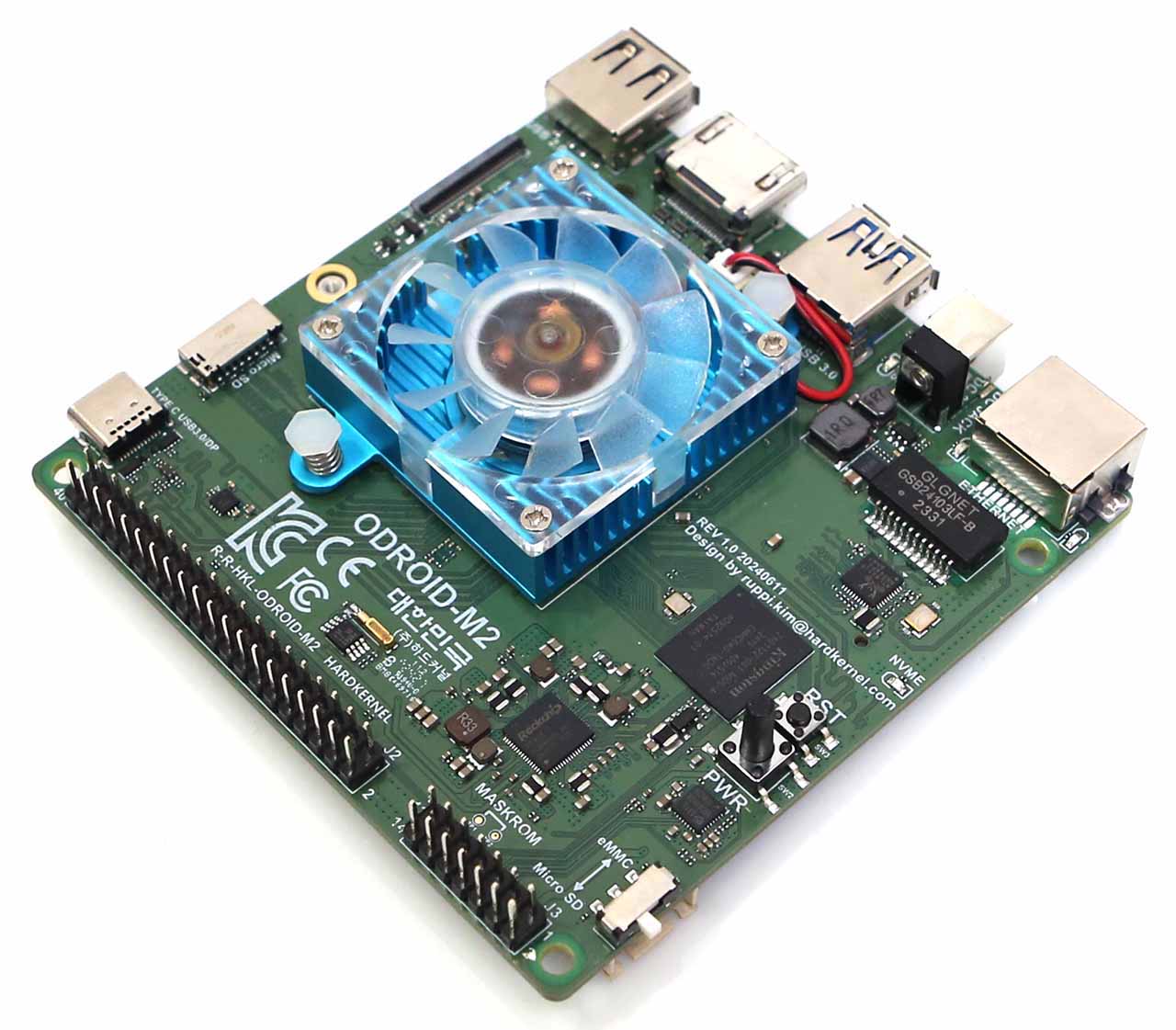
The ODROID-M2 is the pick if a Pi feels slow.
View at HardkernelIts Rockchip RK3588S2 has four Cortex-A76 cores at about 2.3GHz plus four Cortex-A55 cores, a Mali-G610 GPU and a 6 TOPS NPU for AI models. The 8GB version has 64GB of eMMC soldered to the board, an M.2 slot for an NVMe SSD, HDMI 2.0, DisplayPort over USB-C, and 40-pin and 14-pin headers. Hardkernel includes a case and a fan. The catch is software: Hardkernel’s own Ubuntu image is Ubuntu 20.04 on kernel 5.10, so most people should install Armbian, which lists a current kernel for it. Buy it for desktop use, AI experiments or heavier containers.
What we like
- Eight-core RK3588S2 with a 6 TOPS NPU
- 64GB eMMC built in, plus an M.2 NVMe slot
- Case and fan included
Watch out for
- Hardkernel’s own Ubuntu image is old (20.04, kernel 5.10)
- The M.2 slot is PCIe 2.1 x1, so an NVMe SSD runs well below its rated speed
- No Wi-Fi, and only Gigabit Ethernet
- Best x86 board
Hardkernel ODROID-H5 (ODROID-H5)
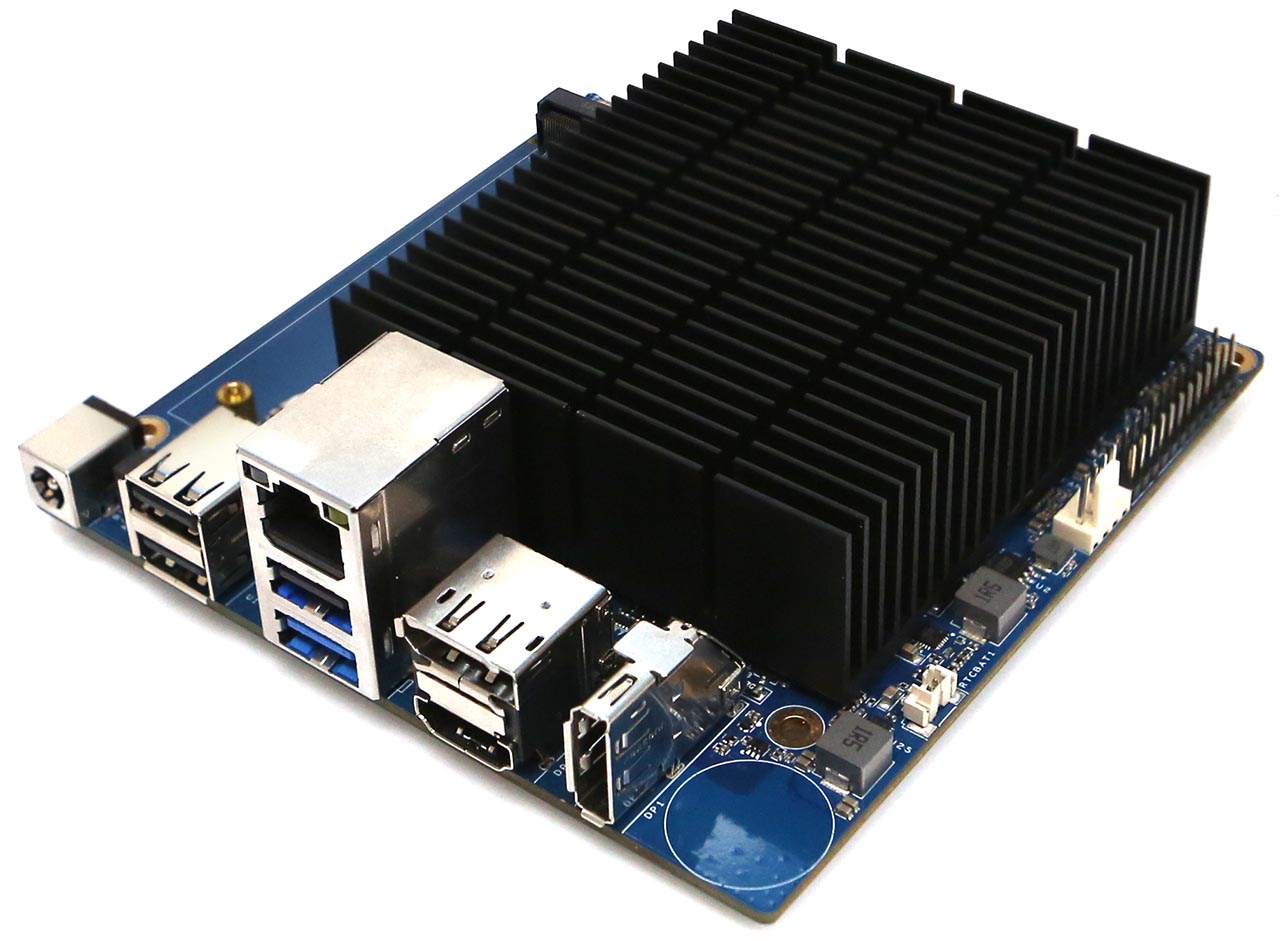
The ODROID-H5 is for anyone tired of hunting for Arm builds of their software.
View at HardkernelIts eight-core Intel Core i3-N300 runs ordinary x86 Linux and Windows 11, so every Docker image and installer for a PC works as it is. It has one DDR5 SO-DIMM slot (Hardkernel says up to 64GB; Intel lists 16GB for the N300, so treat 16GB as the safe figure), four M.2 slots, 10GbE, HDMI 2.0 and two DisplayPort 1.2 outputs. Hardkernel measures about 3.3W at headless idle. It is much bigger than a Pi at about 120mm square, and its 24-pin header has I2C and UART rather than a Pi-style GPIO header, so it suits servers and desktops more than electronics.
What we like
- Runs standard x86 Linux and Windows 11
- About 3.3W at headless idle (Hardkernel figure)
- Four M.2 slots and an upgradeable memory slot
Watch out for
- No Pi-style GPIO header; the 24-pin header has I2C and UART
- Memory, storage, power adapter and case are separate purchases
- Hardkernel warns that parts for future H5 production are hard to secure
- Best for Pi-hole and light servers
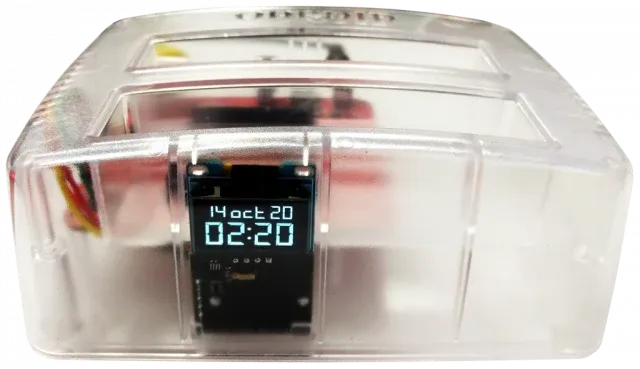
Hardkernel ODROID-HC4 (ODROID-HC4)
Pi-hole needs almost nothing: its docs ask for 512MB of memory and 2GB of storage, and it officially supports Armbian, Debian and Ubuntu.
View at HardkernelAny board that stays on and is wired to your router will do, so don’t pay for 10GbE for it. The ODROID-HC4 is our pick because it does that job and one more: it has the same Amlogic S905X3 and 4GB as the C4, Gigabit Ethernet, and a dock for two 3.5-inch or 2.5-inch SATA drives, so the same box can hold your network backups. Hardkernel measures about 5.88W idle with two hard drives spun down, and Armbian lists it at Standard support with an OpenMediaVault image.
What we like
- Takes two 3.5-inch or 2.5-inch SATA drives
- About 5.88W idle with two drives spun down (Hardkernel figure)
- Armbian Standard support, including an OpenMediaVault image
Watch out for
- No GPIO header, no Wi-Fi and a single USB 2.0 port
- The 15V/4A power adapter is sold separately
- Hardkernel’s own image uses an old 4.9 kernel; Armbian is the better start
If your goal is a home server more than a project board, start with our complete guide to mini PCs for a home server instead. And if you just want a newer Pi, our Raspberry Pi 4 vs Pi 5 comparison covers that choice.
The short version
- Best direct Pi replacement with GPIO: ODROID-C4 (4GB). Pi 4 size, 40-pin header, four USB 3.0 ports, mainline kernel through Armbian.
- Best for more power: ODROID-M2 (8GB). Eight-core RK3588S2, 64GB eMMC, an NVMe slot, and a case and fan in the box.
- Best x86 board: ODROID-H5. Intel Core i3-N300, standard Linux and Windows 11, about 3.3W at idle.
- Best for Pi-hole and light servers: ODROID-HC4. Gigabit Ethernet and two SATA drive bays, so it can hold backups too.
How they compare
Board | Processor | Memory | Storage | GPIO | Ethernet | Power input |
|---|---|---|---|---|---|---|
ODROID-C4 | Amlogic S905X3, 4 x Cortex-A55 | 4GB DDR4 | microSD, eMMC module | 40-pin | 1G | 12V/2A barrel (recommended) |
ODROID-M2 | Rockchip RK3588S2, 4 x A76 + 4 x A55 | 8GB LPDDR5 | 64GB eMMC, M.2 NVMe (PCIe 2.1 x1), microSD | 40-pin and 14-pin | 1G | 12V/2A barrel (recommended) |
ODROID-H5 | Intel Core i3-N300, 8 cores | Add your own DDR5 | 4 x M.2, eMMC connector | 24-pin (I2C, UART) | 10G | 15V/4A barrel (recommended) |
ODROID-HC4 | Amlogic S905X3, 4 x Cortex-A55 | 4GB DDR4 | 2 x SATA bays, microSD | None | 1G | 15V/4A barrel (recommended) |
None of the four has Wi-Fi or Bluetooth on the board, and none ships with a power adapter, so add both to your list if you need them. A Raspberry Pi 4 or Pi 5 has dual-band Wi-Fi built in.
Software support: the weak point of every Pi alternative
Most Pi alternatives match or beat the Pi on hardware. Where they fall short is software, and it decides how much time you spend on setup.
Raspberry Pi sets the bar. Raspberry Pi makes its own operating system for its own boards, and most HAT makers, tutorials and project guides are written for it. On any other board, expect to translate some instructions yourself.
What to look for instead:
- Armbian support. Armbian is a community project that builds Debian and Ubuntu images for Arm boards. It lists the ODROID-C4, M2 and HC4 at its Standard support level, with images on its current kernel branch (6.18 when we checked). Pi-hole lists Armbian among its officially supported systems.
- The maker's own images. These can lag well behind. Hardkernel's Ubuntu image for the M2 is Ubuntu 20.04 on kernel 5.10, and its HC4 image is based on kernel 4.9. Both work, but you get older software and fewer security updates than on Armbian.
- A mainline kernel. A board whose drivers are in the main Linux kernel keeps getting updates after its maker moves on. The Amlogic S905X3 in the C4 and HC4 is an older, well-supported chip. The RK3588S2 in the M2 is newer, and its support depends more on community work.
- Community size. Hardkernel runs its own forum and wiki, but every board here has a far smaller community than the Pi. When something breaks, there are fewer people who have hit the same problem.
The x86 exception. The ODROID-H5 sidesteps most of this. It is a standard Intel PC, so it runs normal Ubuntu, Debian or Windows 11, and any software built for a PC installs without an Arm version. That is the main reason to pick x86 over Arm.
Will my Raspberry Pi HATs work?
The C4 and M2 both have a 40-pin header in the familiar 2.54mm format, but a HAT is only as compatible as its software. Many HATs ship with Python libraries or drivers written for the Raspberry Pi only, so check the HAT maker's notes for other boards before you buy. Also check the voltages: the C4's GPIO uses 3.3V logic like a Pi, but its two analog inputs take 1.8V at most. Simple parts such as buttons, LEDs and I2C sensors are the safest bet.
Which one for which job?
Electronics and hobby projects
Buy the ODROID-C4. It has the Pi's size and header, four USB 3.0 ports, and the best software story of the Arm boards here. Hardkernel lists idle power at under 2W and about 3.64W under CPU stress, so it can run off a small adapter all day. If your project needs Wi-Fi, add a USB adapter or stay with a Raspberry Pi.
A faster desktop, media or AI board
Buy the ODROID-M2. Its eight cores, Mali-G610 graphics and 6 TOPS NPU make it the only board here meant for a light Linux desktop or running small AI models on the board itself. Hardkernel measures about 1.3W at headless idle and says it doesn't throttle in its case with the stock fan. Install Armbian rather than Hardkernel's older Ubuntu image.
Software that only comes for PCs
Buy the ODROID-H5. Anything with an x86 installer or Docker image runs on it, including Windows 11. It is bigger than the others and needs memory, storage and a case, so it is the most work to put together. If you would rather have a finished box, the mini PCs in our home-server guide do the same jobs, and our mini PCs for Plex guide covers media servers.
Pi-hole, a VPN server or a small DNS server
Pi-hole needs almost nothing: any board or mini PC that stays on and is wired to your router will do. Don't pay for 10GbE for it. The ODROID-HC4 is our pick because its two drive bays let the same box run backups as well, but the C4 runs Pi-hole just as happily. Plug it in with a cable rather than relying on Wi-Fi; our Ethernet vs powerline vs mesh guide explains the options if your router is in another room. For more than two drives, see our NAS guide.
Boards we left out
Radxa and Orange Pi make popular RK3588 boards, including the Radxa ROCK 5C, which is the same size as a Pi and has Wi-Fi 6 and a 40-pin header. We left them out because the US stores outside Amazon that we checked didn't have them in stock: ameriDroid listed the ROCK 5C 8GB as out of stock when we checked. The LattePanda IOTA, an x86 board with an RP2040 chip for GPIO, was also out of stock at its maker's store. We will look at all three again at the next update.
How we chose
This guide is research-based. We have not tested these boards. The hardware figures come from Hardkernel’s own spec pages, and the software notes from Armbian’s board pages and Pi-hole’s documentation, all linked under Sources. We grouped the picks by job, since a board for blinking LEDs and a board for a home server need different things. For each job we looked at:
- Software support first. Armbian support, the maker's own images, and how current the kernel is.
- The header. A 40-pin GPIO header for project boards; for server boards, wired networking and proper storage instead.
- Published power figures. Hardkernel measures and publishes idle and load power for each board, which helps for anything left on all day.
- Where you can buy it. Boards we could confirm in stock at the maker's store or a US retailer other than Amazon. We don't compare prices.
Questions people ask
What is the best alternative to a Raspberry Pi?
For most projects, the ODROID-C4. It is the same size as a Pi 4, has a 40-pin GPIO header, and Armbian builds images for it on a current Linux kernel.
Do Raspberry Pi HATs work on other boards?
Sometimes. The ODROID-C4 and M2 have a 40-pin header in the same format, but many HATs rely on drivers or libraries written for the Raspberry Pi only, so check the HAT maker’s notes first.
What do I need to run Pi-hole?
Very little. Pi-hole asks for 512MB of memory and 2GB of free storage, and officially supports Armbian, Debian, Ubuntu and Raspberry Pi OS, so any small board wired to your router will do.
Is software support worse on Pi alternatives?
Usually, yes. Makers’ own images can be years behind, as with Hardkernel’s Ubuntu 20.04 image for the ODROID-M2, and the communities are much smaller. Boards with Armbian support are the safest Arm choice.
Should I get an x86 board instead of an Arm board?
Get x86 if you want to run PC software, Docker images or Windows without hunting for Arm versions. Get Arm if you want GPIO, a Pi-sized board or the lowest power use.
Sources we used
- ODROID-C4 specifications (Hardkernel)
- ODROID-M2 8GB specifications (Hardkernel)
- ODROID-H5 specifications (Hardkernel)
- ODROID-HC4 specifications (Hardkernel)
- Armbian: ODROID-C4 support level and images
- Armbian: ODROID-M2 support level and images
- Armbian: ODROID-HC4 support level and images
- Pi-hole prerequisites: supported systems and hardware
- Radxa ROCK 5C 8GB listing (ameriDroid, out of stock)
- LattePanda IOTA listing (DFRobot)
Comments
No comments yet. Start the conversation.